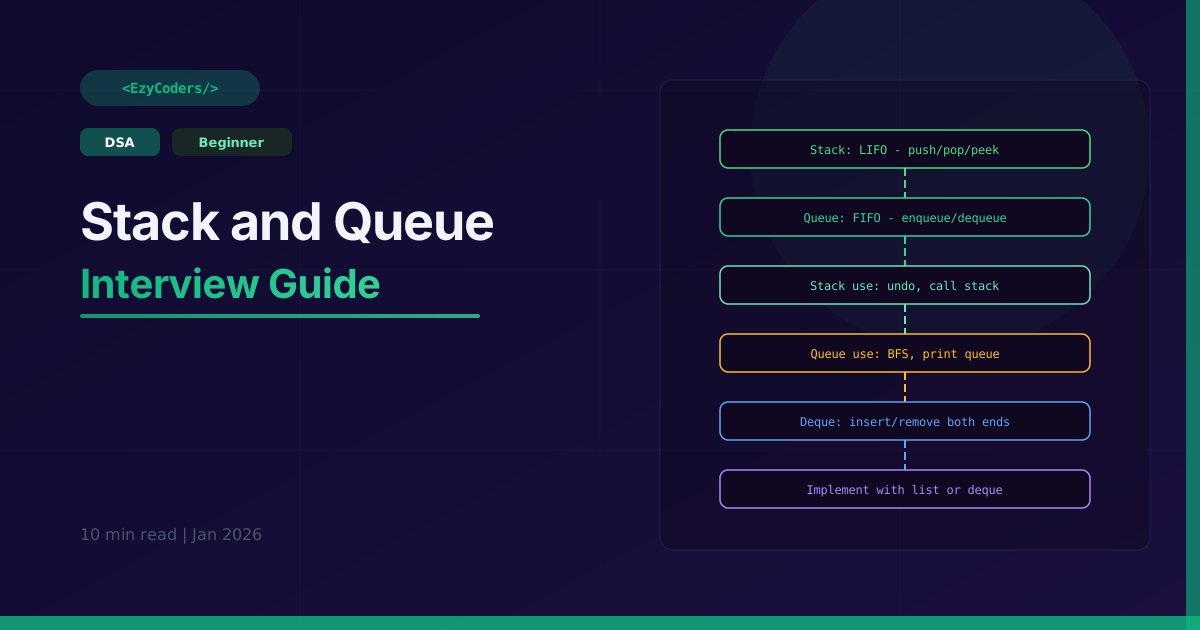
Stack and Queue
Stacks and queues are fundamental data structures used everywhere — function call stacks, browser history, BFS/DFS algorithms, undo systems, and print queues. Both are tested in nearly every entry-level interview.
Stack — LIFO (Last In, First Out)
class Stack:
    def __init__(self):
        self.items = []

    def push(self, item):
        self.items.append(item)    # O(1)

    def pop(self):
        if self.is_empty():
            raise IndexError("Stack is empty")
        return self.items.pop()    # O(1)

    def peek(self):
        if self.is_empty():
            raise IndexError("Stack is empty")
        return self.items[-1]      # top item without removing

    def is_empty(self): return len(self.items) == 0
    def size(self):     return len(self.items)
    def __repr__(self): return f"Stack({self.items})"

s = Stack()
s.push(1); s.push(2); s.push(3)
print(s.peek())  # 3
print(s.pop())   # 3
print(s)         # Stack([1, 2])
Real Stack Use: Balanced Parentheses
def is_balanced(s: str) -> bool:
    stack   = []
    mapping = {')':'(', ']':'[', '}':'{'}

    for char in s:
        if char in '([{':
            stack.append(char)
        elif char in ')]}':
            if not stack or stack[-1] != mapping[char]:
                return False
            stack.pop()

    return len(stack) == 0  # empty = all matched

print(is_balanced("({[]})"))  # True
print(is_balanced("({[})"))   # False
print(is_balanced("()[]{}"))  # True
Queue — FIFO (First In, First Out)
from collections import deque  # O(1) append and popleft

class Queue:
    def __init__(self):
        self.items = deque()

    def enqueue(self, item):
        self.items.append(item)      # add to back O(1)

    def dequeue(self):
        if self.is_empty():
            raise IndexError("Queue is empty")
        return self.items.popleft()  # remove from front O(1)

    def front(self):      return self.items[0]
    def is_empty(self):   return len(self.items) == 0
    def size(self):       return len(self.items)

q = Queue()
q.enqueue('Rahul'); q.enqueue('Priya'); q.enqueue('Amit')
print(q.dequeue())  # Rahul (first in, first out)
print(q.front())    # Priya
Stack with Min — Classic Interview Question
class MinStack:
    def __init__(self):
        self.stack     = []
        self.min_stack = []  # tracks minimum at each level

    def push(self, val):
        self.stack.append(val)
        # Track running minimum
        curr_min = min(val, self.min_stack[-1]) if self.min_stack else val
        self.min_stack.append(curr_min)

    def pop(self):
        self.min_stack.pop()
        return self.stack.pop()

    def top(self):     return self.stack[-1]
    def getMin(self):  return self.min_stack[-1]  # O(1)!

ms = MinStack()
ms.push(5); ms.push(3); ms.push(7); ms.push(2)
print(ms.getMin())  # 2
ms.pop()
print(ms.getMin())  # 3
Q: Why use deque instead of list for a Queue?
list.pop(0) is O(n) because it shifts all elements. deque.popleft() is O(1) because deque is a doubly-linked list under the hood. Always use collections.deque for queues in Python.
Q: How is a stack used in function calls?
Every function call pushes a stack frame onto the call stack — containing local variables, parameters, and return address. When the function returns, its frame is popped. Stack overflow occurs when recursion is too deep and the call stack runs out of memory.




Comments (0)
No comments yet. Be the first!
Leave a Comment