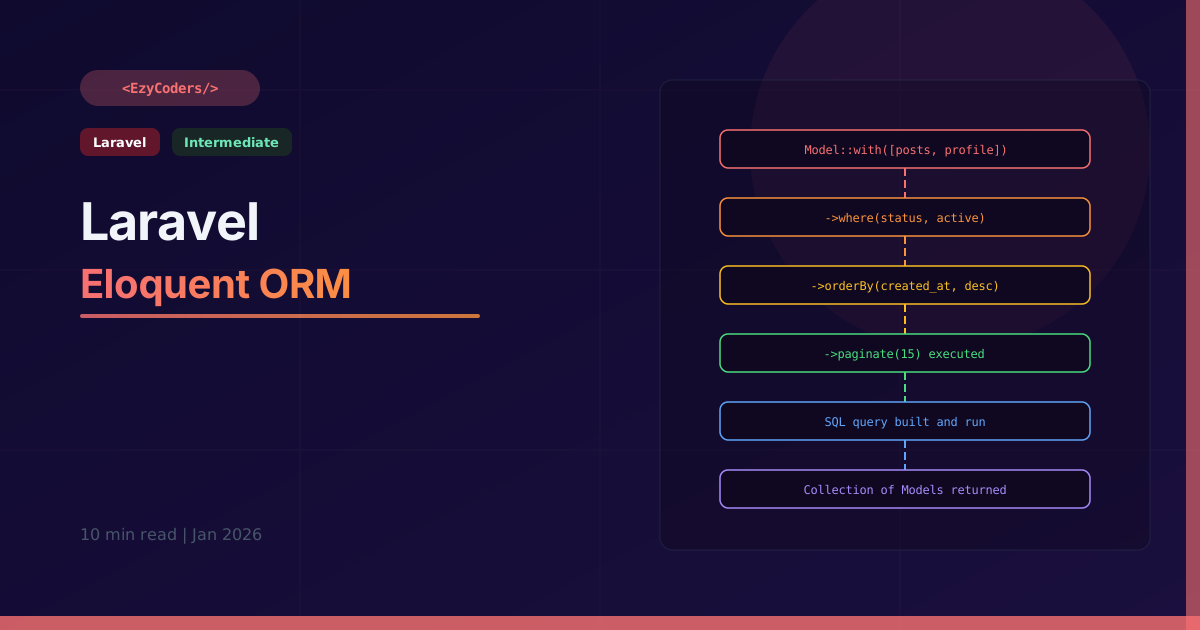
Eloquent ORM
Eloquent makes database interactions expressive and object-oriented. Understanding eager loading and relationships is critical — it directly impacts your application's query performance.
Model Definition
<?php
use Illuminate\Database\Eloquent\Model;

class Post extends Model {
    protected $fillable = ['title', 'content', 'user_id', 'status'];
    protected $casts    = [
        'is_published' => 'boolean',
        'published_at' => 'datetime',
        'meta'         => 'array',
    ];

    // Local scope — reusable query constraint
    public function scopePublished($query) {
        return $query->where('status', 'published');
    }
}
Relationships
<?php
class User extends Model {
    public function profile()  { return $this->hasOne(Profile::class); }
    public function posts()    { return $this->hasMany(Post::class); }
    public function roles()    { return $this->belongsToMany(Role::class)->withPivot('assigned_at'); }
    public function comments() { return $this->hasManyThrough(Comment::class, Post::class); }
}

class Post extends Model {
    public function user() { return $this->belongsTo(User::class); }
    public function tags() { return $this->belongsToMany(Tag::class)->withTimestamps(); }
}
N+1 Problem and Eager Loading
<?php
// BAD — 1 + N queries (N = number of posts)
$posts = Post::all();
foreach ($posts as $post) {
    echo $post->user->name; // new query each iteration!
}

// GOOD — always 2 queries regardless of post count
$posts = Post::with('user')->get();
foreach ($posts as $post) {
    echo $post->user->name; // no extra queries
}

// Load multiple relationships
$posts = Post::with(['user', 'tags', 'comments.user'])->get();

// Conditional eager loading
$posts = Post::with(['comments' => function($q) {
    $q->where('approved', true)->latest();
}])->get();
Query Builder
<?php
// Chaining conditions
$users = User::where('active', 1)
             ->whereIn('role', ['admin', 'editor'])
             ->whereNotNull('email_verified_at')
             ->orderBy('name')
             ->paginate(15);

// Aggregate
$stats = Post::selectRaw('category_id, COUNT(*) as total, AVG(views) as avg_views')
             ->where('status', 'published')
             ->groupBy('category_id')
             ->having('total', '>', 5)
             ->get();

// Subquery — users with 10+ published posts
$topAuthors = User::whereHas('posts', function($q) {
    $q->where('status', 'published');
}, '>=', 10)->get();
Q: What is the N+1 query problem?
When you load N records then execute 1 additional query per record for a relationship, resulting in N+1 total queries. For 100 posts, that is 101 queries instead of 2. Solve it with with() for eager loading.
Q: Difference between hasMany and belongsToMany?
hasMany is a one-to-many relationship with a foreign key on the child table. belongsToMany uses a pivot/junction table for many-to-many. A user hasMany posts (user_id on posts table) but belongsToMany roles (user_role pivot table).




Comments (0)
No comments yet. Be the first!
Leave a Comment