SQL Transactions and ACID
Transactions ensure data integrity when multiple operations must succeed or fail together. ACID properties are the theoretical guarantee behind reliable database systems — understanding them is required for senior interviews.
-- Basic transaction
START TRANSACTION;

UPDATE accounts SET balance = balance - 5000 WHERE id = 1;
UPDATE accounts SET balance = balance + 5000 WHERE id = 2;
INSERT INTO transfers (from_id, to_id, amount) VALUES (1, 2, 5000);

COMMIT;   -- all succeed together
-- ROLLBACK; -- all fail together if any error

-- Savepoints — partial rollback
START TRANSACTION;
INSERT INTO orders (user_id, total) VALUES (1, 999);
SAVEPOINT order_created;

INSERT INTO order_items (order_id, product_id, qty) VALUES (LAST_INSERT_ID(), 5, 2);
-- Something went wrong with items but not order:
ROLLBACK TO SAVEPOINT order_created;  -- undo items, keep order
COMMIT;  -- commit just the order
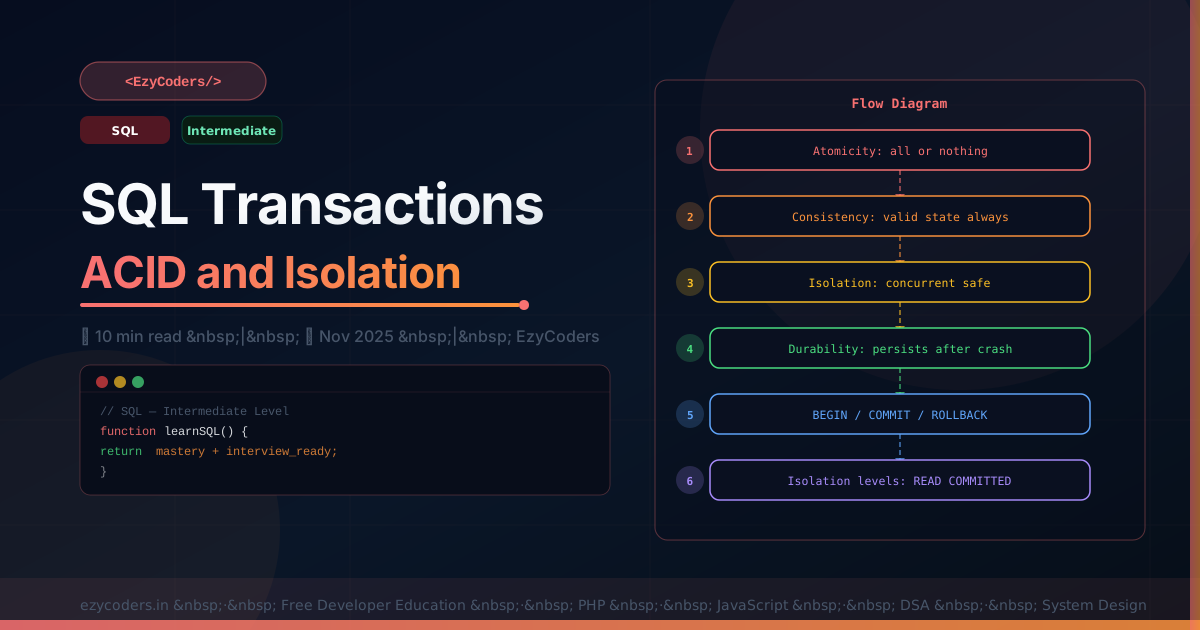
ACID Properties
A — Atomicity: All operations in a transaction succeed or ALL fail. No partial commits. If the server crashes mid-transaction, it rolls back automatically on restart.
C — Consistency: The database moves from one valid state to another. Constraints (foreign keys, unique, check) are enforced. A transaction that violates a constraint is rejected.
I — Isolation: Concurrent transactions don't interfere with each other. Controlled by isolation levels.
D — Durability: Once committed, data survives crashes. Written to disk (WAL/redo log) before commit returns.
Isolation Levels
-- Set isolation level
SET SESSION TRANSACTION ISOLATION LEVEL READ COMMITTED;

-- READ UNCOMMITTED: can read other transactions' uncommitted data (dirty reads)
-- READ COMMITTED:   reads only committed data (default in PostgreSQL)
-- REPEATABLE READ:  same query returns same result within transaction (default MySQL InnoDB)
-- SERIALIZABLE:     strictest, fully isolated, lowest concurrency

-- Concurrency problems:
-- Dirty Read:       reading uncommitted data from another transaction
-- Non-repeatable:  same row read twice gets different values (committed between)
-- Phantom Read:    same query returns different row count (insert between reads)

-- Check current level
SELECT @@transaction_isolation;
Q: What isolation level does MySQL InnoDB use by default?
REPEATABLE READ. This means: within a transaction, repeated reads of the same row always return the same data even if another transaction commits changes. It prevents dirty reads and non-repeatable reads but still allows phantom reads (though InnoDB's gap locks largely prevent phantoms in practice too).









Comments (0)
No comments yet. Be the first!
Leave a Comment