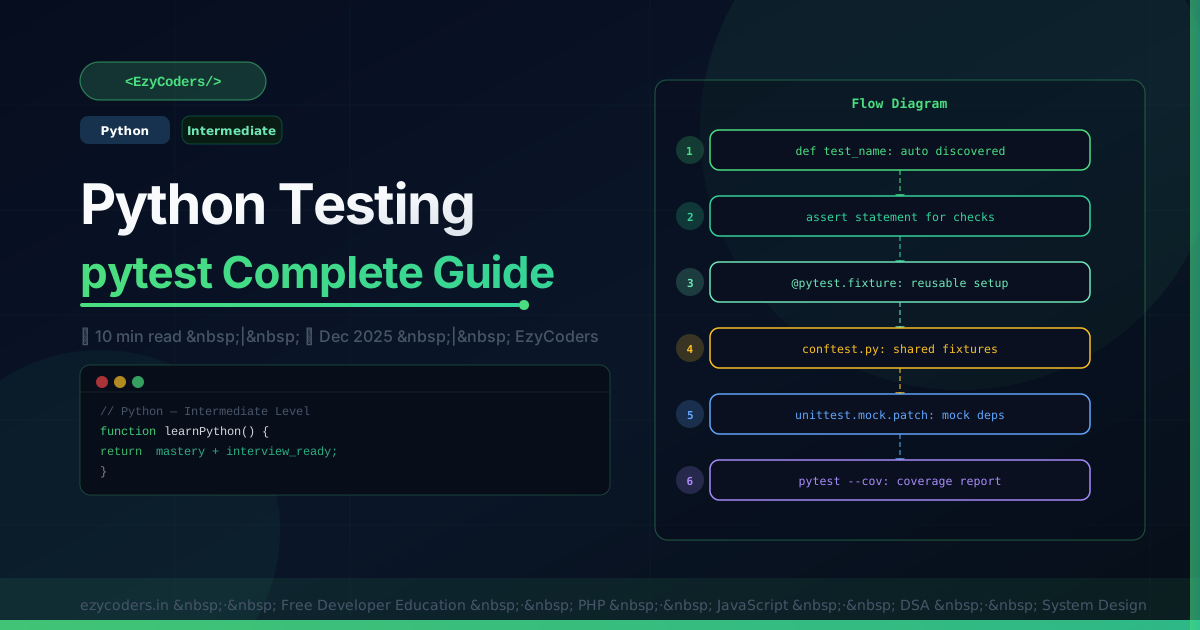
Python Testing with pytest
pytest is the most popular Python testing framework. More concise than unittest, with excellent fixture support and parametrization.
def test_addition():
    assert 2 + 2 == 4

def test_raises():
    import pytest
    with pytest.raises(ValueError, match="invalid"):
        validate_email("not-an-email")
Fixtures
import pytest

@pytest.fixture
def sample_user():
    return {'id': 1, 'name': 'Rahul', 'email': 'r@e.com', 'active': True}

@pytest.fixture
def db():
    connection = create_test_db()
    yield connection
    connection.close()

def test_user_is_active(sample_user):
    assert sample_user['active'] is True

def test_user_in_db(db, sample_user):
    db.insert('users', sample_user)
    result = db.find('users', id=1)
    assert result['name'] == 'Rahul'
Parametrize and Mocks
import pytest
from unittest.mock import patch

@pytest.mark.parametrize("email,valid", [
    ("rahul@example.com", True),
    ("bad-email", False),
    ("@nodomain.com", False),
])
def test_email_validation(email, valid):
    assert validate_email(email) == valid

def test_send_email():
    with patch('myapp.services.send_email') as mock_send:
        mock_send.return_value = True
        result = UserService.register({'name': 'Rahul', 'email': 'r@e.com'})
        mock_send.assert_called_once_with('r@e.com', subject='Welcome!')
pytest -v # verbose
pytest -k "test_user" # run matching tests
pytest --cov=myapp --cov-report=html # coverage reportQ: Mock vs Stub?
A stub provides hardcoded return values to isolate the system under test. A mock additionally records calls and verifies interactions (assert_called_once). Use stubs when you only care about output; use mocks when you also care about whether and how a function was called.





Comments (0)
No comments yet. Be the first!
Leave a Comment