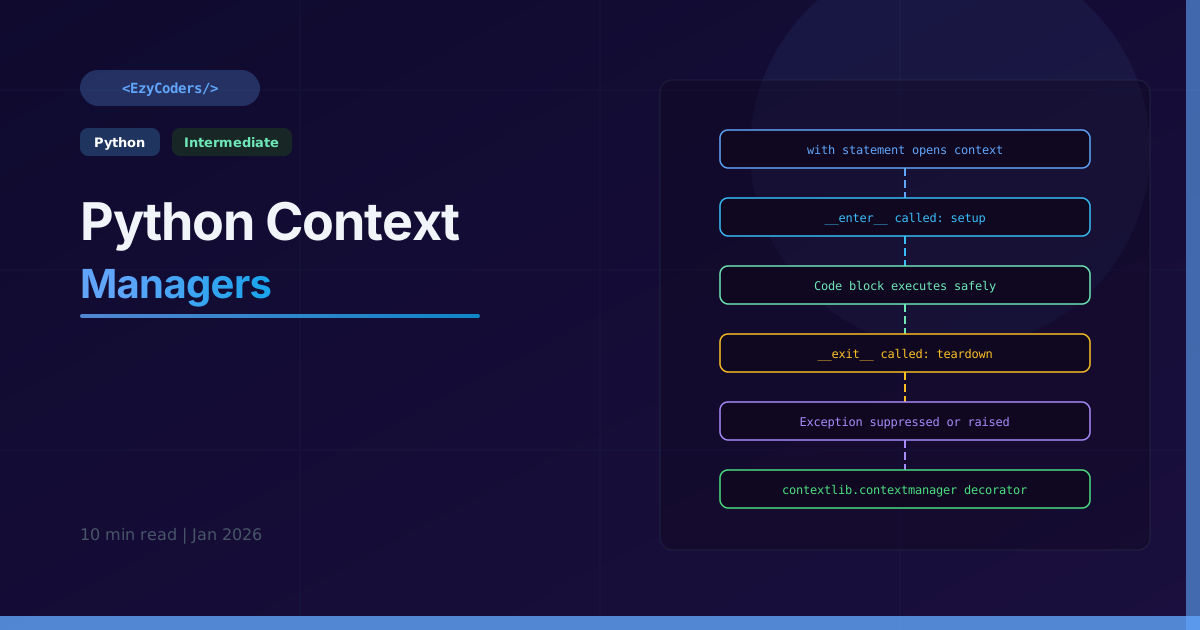
Python Context Managers
The with statement ensures resources are properly acquired and released — even if exceptions occur. File handles, database connections, locks, and timers all benefit from context managers.
Built-in Context Managers
# File handling — file ALWAYS closed even if exception occurs
with open('data.txt', 'r') as f:
    content = f.read()
# f is automatically closed here

# Multiple context managers
with open('input.txt', 'r') as src, open('output.txt', 'w') as dst:
    dst.write(src.read())

# Threading lock
import threading
lock = threading.Lock()
with lock:
    # critical section — lock released even on exception
    shared_resource.update()

# Decimal precision
from decimal import Decimal, localcontext
with localcontext() as ctx:
    ctx.prec = 50  # 50 decimal places for this block only
    result = Decimal('1') / Decimal('3')
    print(result)  # 0.33333333333333333333333333333333333333333333333333
Class-Based Context Manager
class DatabaseConnection:
    def __init__(self, host, db):
        self.host = host
        self.db   = db
        self.conn = None

    def __enter__(self):
        print(f"Connecting to {self.db}@{self.host}")
        self.conn = create_connection(self.host, self.db)
        return self.conn   # returned to the 'as' variable

    def __exit__(self, exc_type, exc_val, exc_tb):
        if exc_type:
            print(f"Exception occurred: {exc_val}")
            self.conn.rollback()
        else:
            self.conn.commit()
        self.conn.close()
        print("Connection closed")
        return False  # False: don't suppress exceptions; True: suppress

with DatabaseConnection('localhost', 'ezycoders') as conn:
    conn.execute('INSERT INTO users VALUES (...)')
# commit + close happen automatically
contextlib — Function-Based Context Manager
from contextlib import contextmanager
import time

@contextmanager
def timer(label=''):
    start = time.perf_counter()
    try:
        yield  # code in the with block runs here
    finally:
        elapsed = time.perf_counter() - start
        print(f"{label}: {elapsed:.4f}s")

with timer('Processing'):
    result = sum(range(10_000_000))
# Processing: 0.3421s

@contextmanager
def temp_directory():
    import tempfile, shutil, os
    tmpdir = tempfile.mkdtemp()
    try:
        yield tmpdir          # provide temp dir path
    finally:
        shutil.rmtree(tmpdir) # always cleanup

with temp_directory() as tmp:
    # do work in tmp
    with open(f'{tmp}/output.csv', 'w') as f:
        f.write('name,score\nRahul,95')
# tmp directory deleted automatically
Nested and Reusable Context Managers
from contextlib import contextmanager, suppress

# suppress — ignore specific exceptions
with suppress(FileNotFoundError):
    os.remove('might_not_exist.txt')  # no exception raised if missing

# ExitStack — dynamic context managers
from contextlib import ExitStack

files = ['a.txt', 'b.txt', 'c.txt']
with ExitStack() as stack:
    handles = [stack.enter_context(open(f)) for f in files]
    data = [h.read() for h in handles]
# all files closed

# Real-world: database transaction
@contextmanager
def transaction(conn):
    try:
        yield conn
        conn.commit()
    except Exception:
        conn.rollback()
        raise

with transaction(db_conn) as conn:
    conn.execute('UPDATE accounts SET balance = balance - 100 WHERE id = 1')
    conn.execute('UPDATE accounts SET balance = balance + 100 WHERE id = 2')
Q: What are __enter__ and __exit__?
__enter__ is called when entering the with block and its return value is bound to the as variable. __exit__ receives exc_type, exc_val, exc_tb — if an exception occurred, these are set; otherwise they are all None. Return True from __exit__ to suppress the exception.
Q: When should you use contextlib.contextmanager vs a class?
Use @contextmanager for simple cases — it is less code and very readable. Use a class when you need reusable state, multiple methods, or when the context manager will be subclassed. Both are equivalent in terms of functionality.




Comments (0)
No comments yet. Be the first!
Leave a Comment