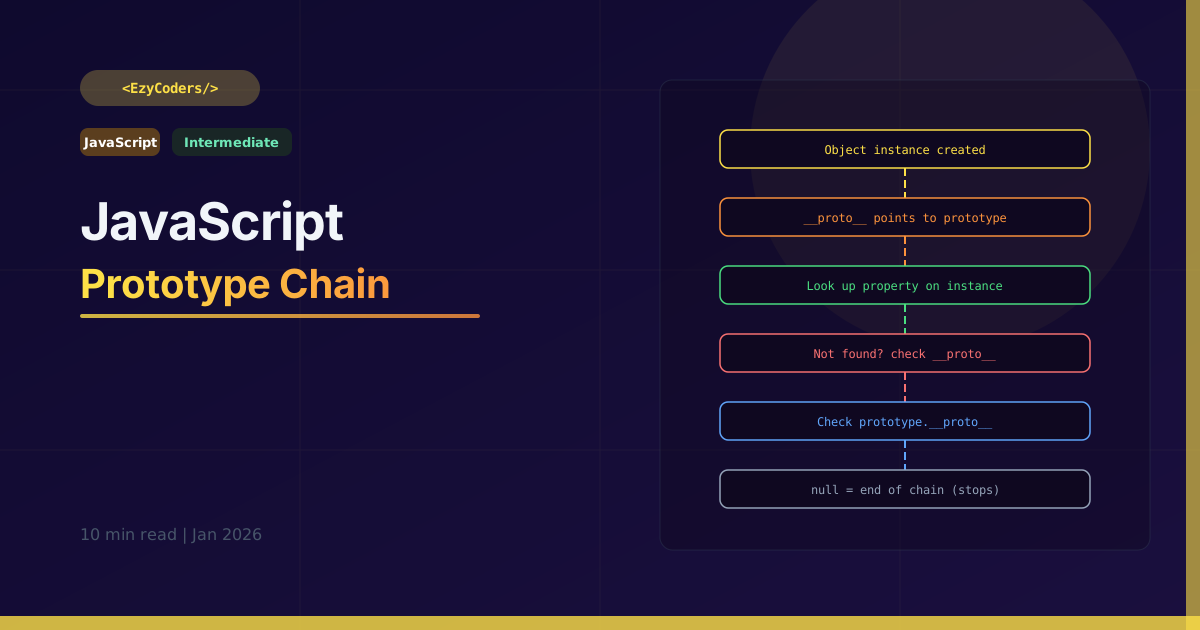
Prototype Chain
Every JavaScript object has an internal [[Prototype]] link — a reference to another object. When you access a property, JS looks up the chain until it finds it or reaches null. This is the foundation of all inheritance in JavaScript.
Understanding __proto__ and prototype
const animal = {
    breathes: true,
    eat() { return 'Eating...'; }
};

const dog = Object.create(animal); // dog.__proto__ = animal
dog.name  = 'Rex';
dog.bark  = function() { return 'Woof!'; };

console.log(dog.bark());     // Woof!   ← own property
console.log(dog.eat());      // Eating! ← found on animal (prototype)
console.log(dog.breathes);   // true    ← found on animal
console.log(dog.hasOwnProperty('name')); // true
console.log(dog.hasOwnProperty('eat'));  // false (on prototype)
Constructor Functions and prototype
function Person(name, age) {
    this.name = name;
    this.age  = age;
}

// Methods on prototype — shared across ALL instances (not duplicated)
Person.prototype.greet = function() {
    return `Hi, I'm ${this.name}`;
};

Person.prototype.isAdult = function() {
    return this.age >= 18;
};

const p1 = new Person('Rahul', 25);
const p2 = new Person('Priya', 30);

console.log(p1.greet());  // Hi, I'm Rahul
console.log(p2.greet());  // Hi, I'm Priya
// Both share the SAME greet function (prototype) — no memory duplication
ES6 Classes — Syntactic Sugar
class Animal {
    #sound; // private field (ES2022)

    constructor(name, sound) {
        this.name  = name;
        this.#sound = sound;
    }

    speak() {
        return `${this.name} says ${this.#sound}`;
    }

    static create(name, sound) {
        return new Animal(name, sound);
    }
}

class Dog extends Animal {
    constructor(name) {
        super(name, 'Woof'); // call parent constructor
    }

    fetch(item) {
        return `${this.name} fetches ${item}`;
    }
}

const dog  = new Dog('Rex');
console.log(dog.speak()); // Rex says Woof
console.log(dog.fetch('ball')); // Rex fetches ball
console.log(dog instanceof Dog);    // true
console.log(dog instanceof Animal); // true
Prototype Chain Lookup
// Chain: dog → Dog.prototype → Animal.prototype → Object.prototype → null
const dog = new Dog('Rex');

// toString() found on Object.prototype
console.log(dog.toString()); // [object Object]

// Check chain manually
console.log(Object.getPrototypeOf(dog) === Dog.prototype);         // true
console.log(Object.getPrototypeOf(Dog.prototype) === Animal.prototype); // true
console.log(Object.getPrototypeOf(Animal.prototype) === Object.prototype); // true
Q: What is the difference between __proto__ and prototype?
prototype is a property of constructor functions — it defines what the prototype will be for objects created with new. __proto__ (or [[Prototype]]) is the actual prototype link on every object instance. Object.getPrototypeOf() is the preferred way to access it.
Q: Are ES6 classes fundamentally different from prototype-based inheritance?
No. Classes are syntactic sugar over the existing prototype system. class Dog extends Animal compiles to the same prototype chain as manual prototype assignment. The engine still uses [[Prototype]] under the hood.











Comments (0)
No comments yet. Be the first!
Leave a Comment